Ensign Reborn
The Mike Hanson Story
If, like me, you have ever been puzzled to find relatively modern 110 cameras and filter packs with the famous Ensign name and logo on them, read on!
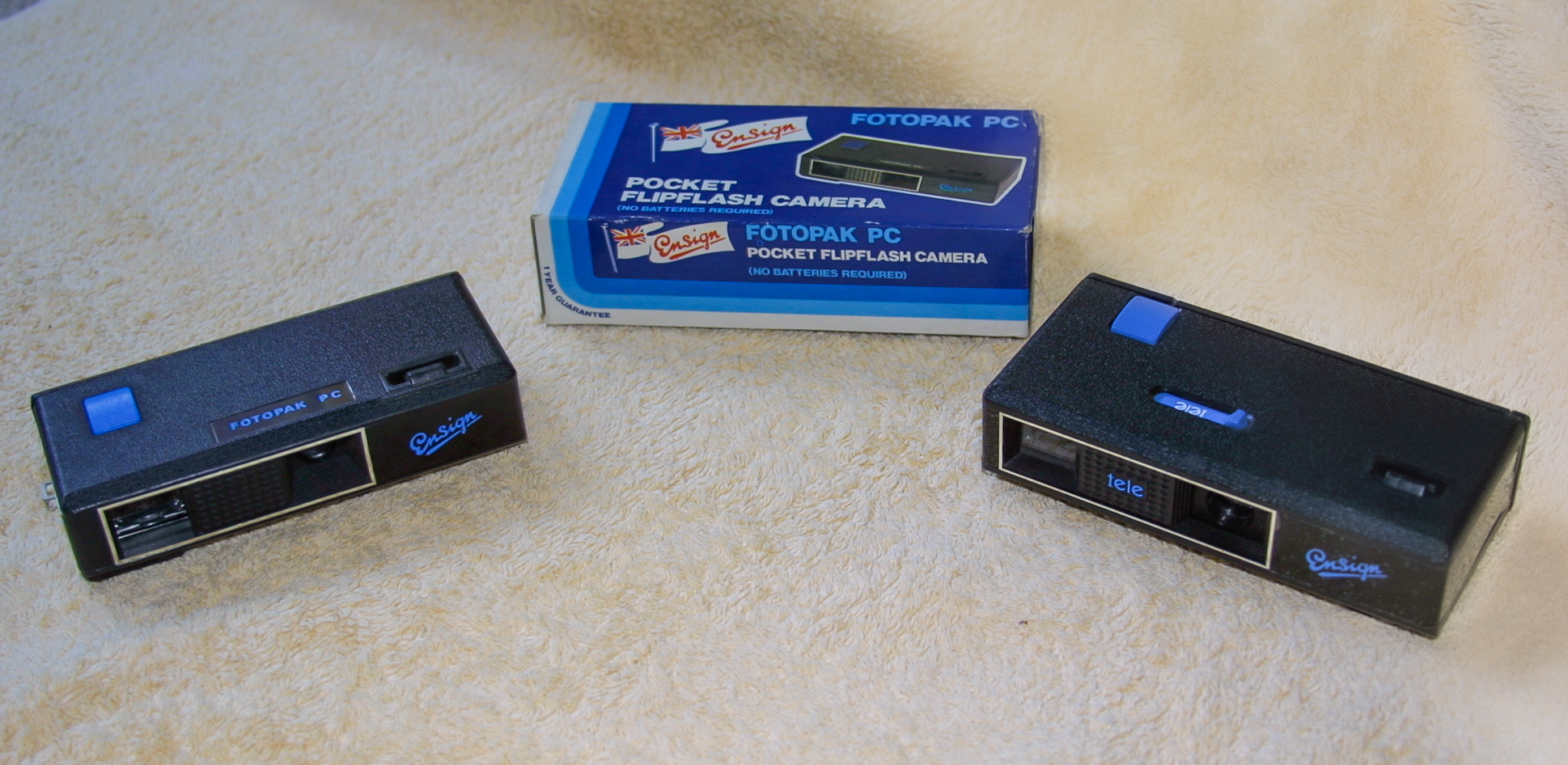
It is common knowledge that Ross Ensign went out of business in the early 60’s. The companies demise ending a hundred years of trading in the photographic industry. What had started as a small glass manufacturing business under the first chairman George Houghton and had later grown into the biggest manufacturer of photographic goods Britain had seen, had gone. However, most people are not aware that the Ensign name would resurface and become part of a multi-million-pound business only two decades later.
The person behind the revival of the Ensign name was Michael Hanson. Michael started his remarkable career in the photographic retail trade in 1947 when he began work in Wallace Heaton’s mail order department. Michael went on to work at Bennetts (later known as Dixon’s), Photopia Ltd. Finally setting up his own company to import and sell Tasco binoculars in 1975 with his partner Michael Bell an accountant.
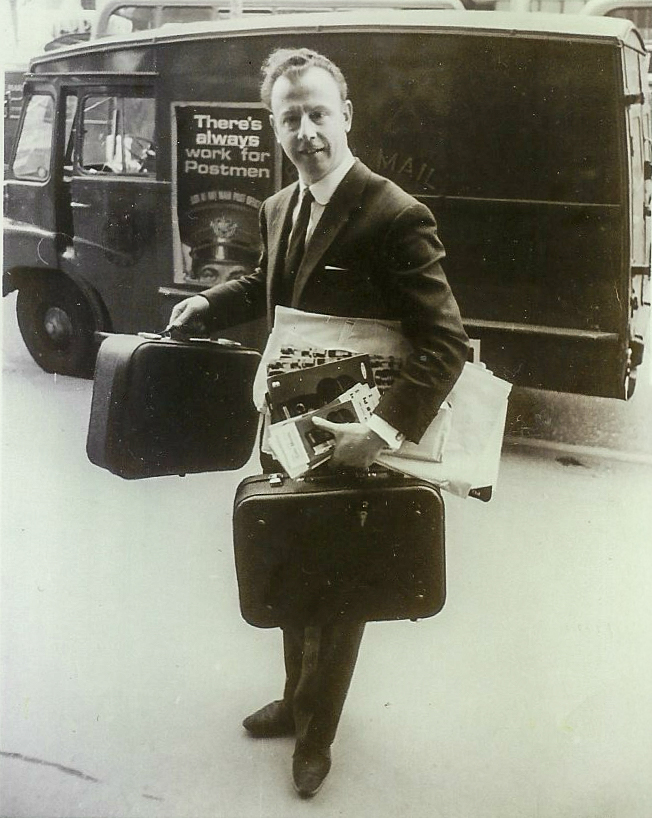
Michael was doing his favourite job, travelling, meeting people and selling Tasco. Business grew and eighteen months later they acquired a new warehouse in Newbury. Soon the company had a million pound turn over and was becoming very successful, but Michael was concerned that should anything happen to his sole supplier, his company would be very vulnerable, it was time to diversify.
So, he bought the loss making company ‘Head Sports’ and by 1987 the company was turning over several million pounds under the name ‘Sportline’.
The optical products, binoculars and telescopes, were doing very well and alongside those selling into photographic retailers Michael begun to sell items into the toy trade. Telescopes and microscopes made excellent toys and his introduction to this trade opened his eyes to other opportunities. Both he and his partner, Michael Bell an accountant, wanted to further expand the business and decided to add a photographic division to the company. Binoculars were an impulse buy; it was felt that cameras and other special products (gifts) would help steady the cashflow. To this end the directors asked Phil Marks to join them and run a photographic division. Phil had worked for Woolco. Which was the superstore of Woolworths, Woolco sold photographic products as well as Tasco binoculars and he brought to the company extensive experience of selling products into the mail order catalogue business.
It was decided they needed a name for the photographic division and together they looked at companies that were no longer in business as it was felt an established name would carry more weight in photographic circles. They considered Pullin, Neville Brown, Hunter but then they discovered that ‘Ensign’ was available. Immediately they felt this was the right name for them. "People will recognise Ensign, its royal, everybody knows the Ensign flag and it was a familiar name to people in the street." Michael Bell visited Companies House to do a search and found the name ‘Ensign Photographic’ lying dormant. It was purchased for a mere 100 pounds and with it came the right to the name and trademark originally used by the largest photographic manufacturer Britain had known.
Ensign Photographic Limited was formed and it was decided to draw on Phil Marks extensive experience with mail order companies, gained during his time with Rollei, and go for volume sales to catalogue companies like Argos, GUS and Littlewoods. Catalogues sold thousands of products to the general public and their purchasing power allowed bulk buying, which made their prices very competitive.
Phil was given a 25 per cent holding in the company and freedom to develop it as he wished. His first job was to find products that would appeal to the catalogue companies and he went to the Far East to meet with a variety of manufacturers. He returned with options on products that ranged from 110 cameras to novelty items like pens and lighters, all of which were to be marketed under the ‘Ensign’ label.
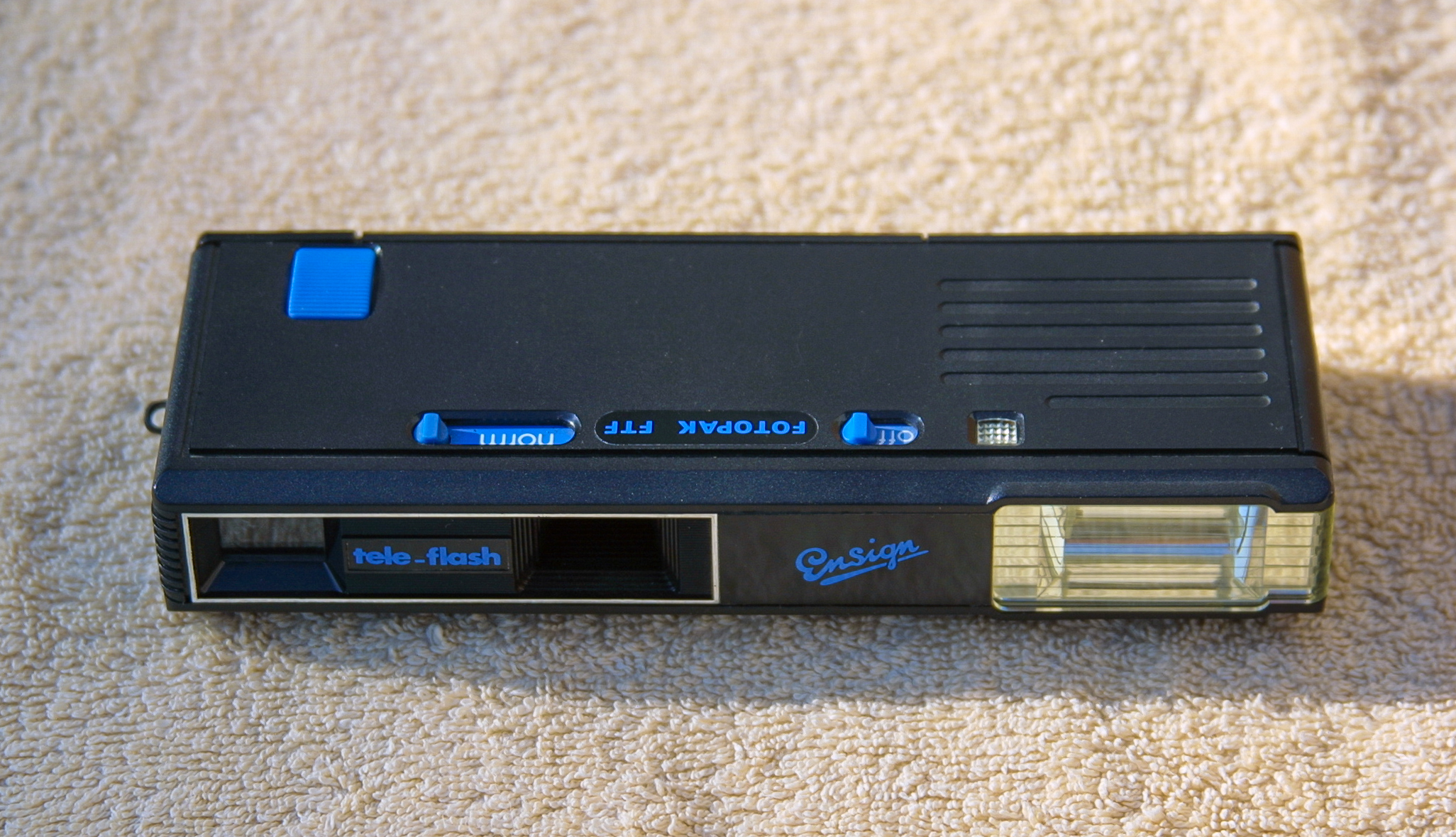
The artwork consisted of Ensign's original logo, but the products were all made either in Singapore, Hong Kong or Japan. Sales to the catalogue companies were good and in 1981 a range of five 110 cameras called 'Ensign Fotopacks' were introduced. These were made in Singapore by a company called Benson-Lee and surprisingly, although cheap cameras, received a review in Amateur Photographer. They were also sold as premium items; you could even buy an Ensign Fotopack with Luncheon vouchers. Alongside the 110 cameras were tripods, lenses, bags, pens, lighters, watches and filter sets.
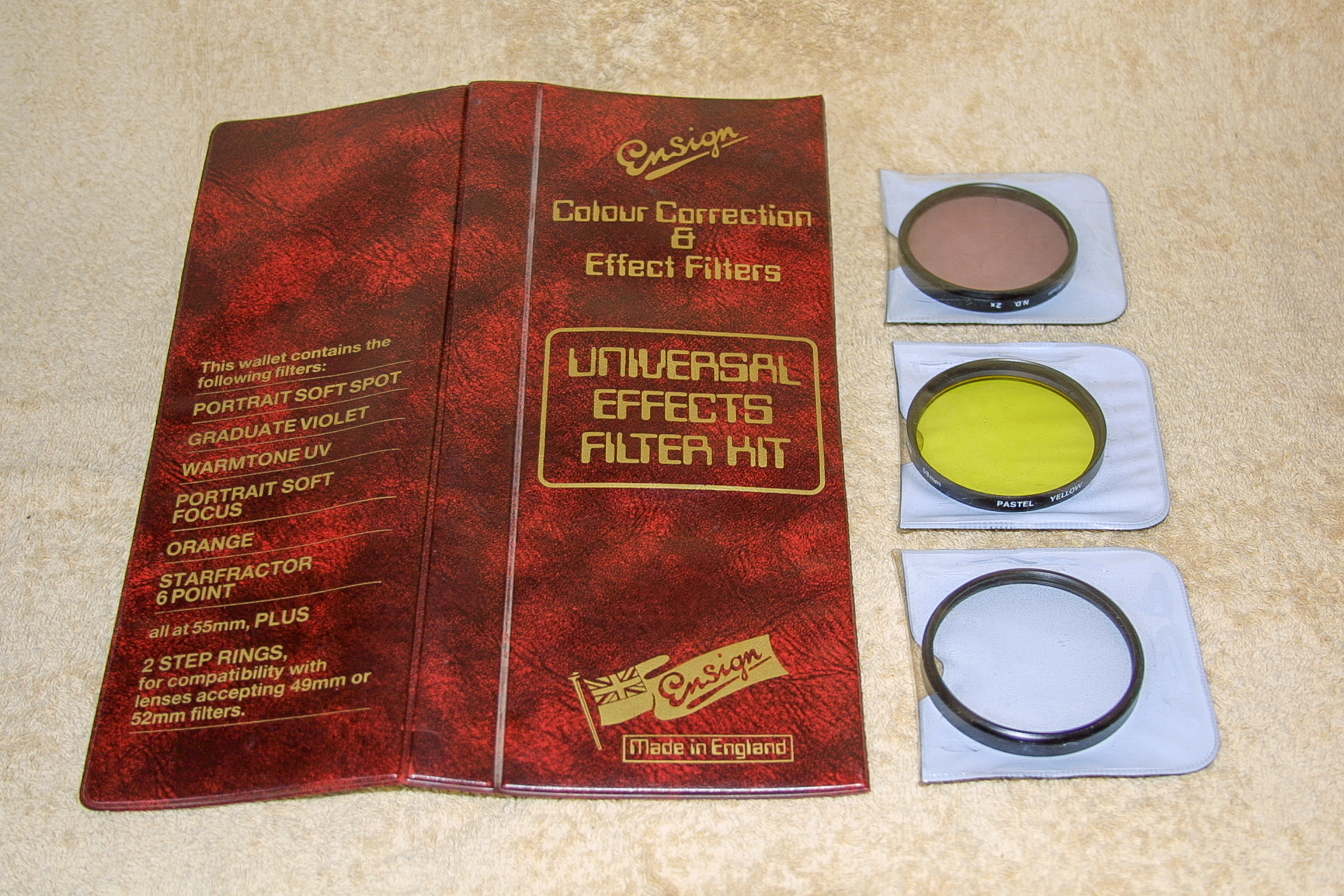
The filter sets were the only products made in Britain, sold under the Ensign banner in Argos but in Littlewoods the same product was sold as a Hunter filter set and you can still find these for sale today second hand at the numerous camera fairs around the country. Strangely, although they sold in large numbers, the branded Ensinor lenses which they also sold are much harder to find.
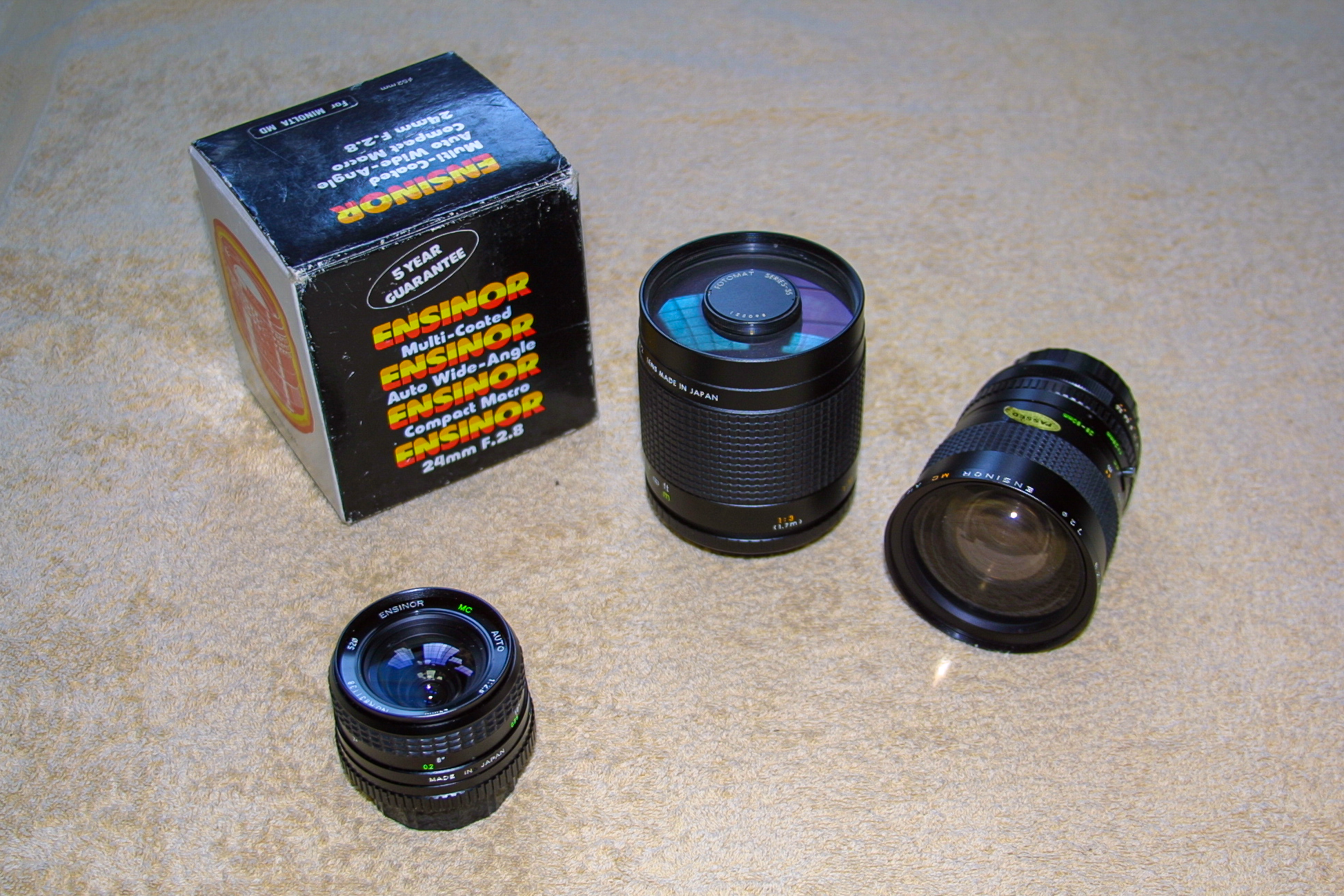
It transpired that the Ensign name was not as important for sales as they had anticipated. Most people, particularly in the catalogue business, were not familiar with the name Ensign or the photographic company it used to be. Most sales were conducted person to person so the products name was not so important to the catalogue buyers as the relationship with the salesman. The key to keeping them happy was a steady supply from a trusted supplier. However, it was a strong name and the public liked it and the packaging with the patriotic flag meant the cameras and lenses sold well.
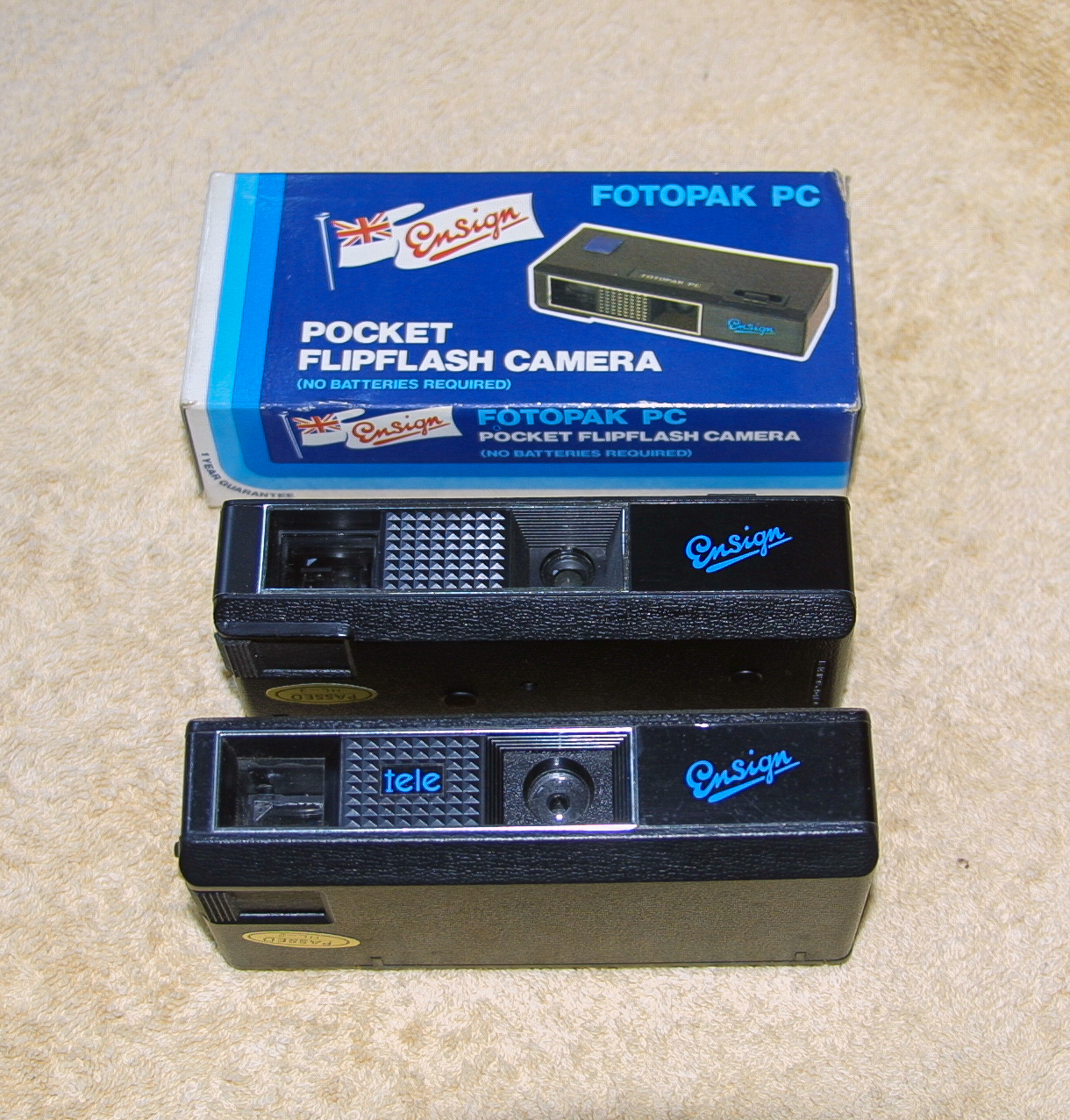
However, the very British branding led to problems. Michael was warned he was going to receive a call from the managing director of ‘GUS’ one of the leading catalogues. It turned out that they were very unhappy to have been selling cameras with the Ensign flag that were in fact made in Singapore. The MD complained to Michael that he had misrepresented the product. However, the cameras sold well and the catalogue did not want to drop the product. Michael managed to pacify ‘GUS’ by arranging for the packaging to be printed without any reference to the country of origin and in this way an accommodation was reached. Not strictly correct but no one complained.
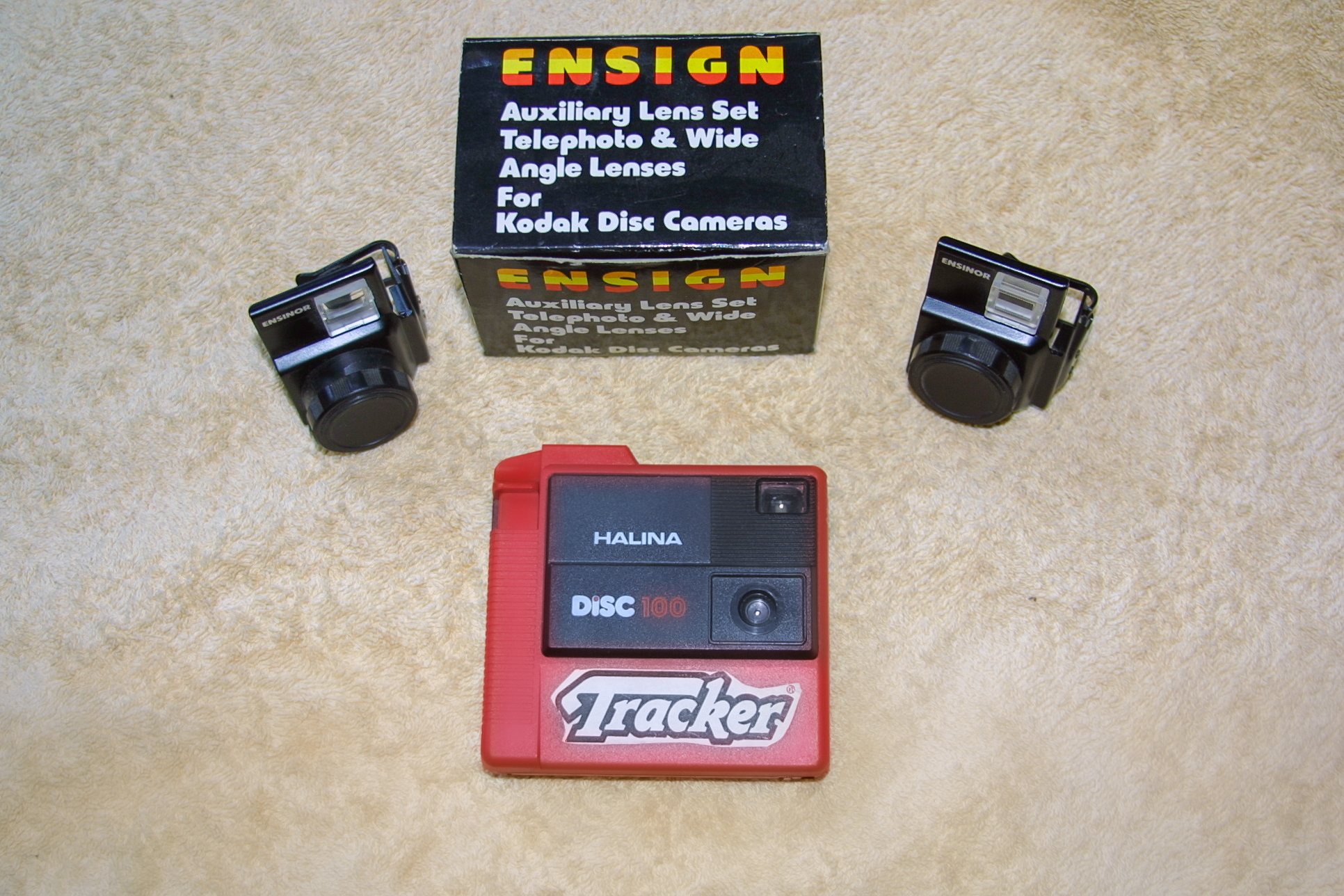
The 110 cameras sold particularly well but were later phased out in favour of disc cameras, Kodak were putting a lot of marketing muscle behind disc they were smaller than 110 and it was felt they were more likely to succeed in the long term. This turned out to be a mistake as 110 continued to sell well for a number of years and we all know what eventually happened to the disc format.
Unfortunately, Phil Marks became ill and was forced to retire to Spain on health grounds. This left Michael with no one to lead the photographic division. Catalogue sales were reducing as companies like Carl Zeiss with their Praktica range of lenses largely took the catalogue market that the Ensinor mark had been filling. With the acquisition of the Canadian ‘Optex’ agency, which focused more on video products, Michael’s energies became increasingly diverted into expanding retail sales. ‘Ensign Photographic’ slowly faded away because there was no one to buy and sell products under this name.
Conversely, Michael's Umbrella Company, Tasco Distributors Ltd. was doing very well, and pressure was growing for him to float on the unlisted stock market. This was an expensive process Michael Hanson and Michael Bell had already invested large sums of their own money building their company and now felt it might be time to get something back. It was decided to sell the business. They approached Ray Dinkin the Managing Director of a company called Porter-Chadburn having heard he wanted to expand by acquiring new businesses. Negotiations began and eventually they persuaded him to buy ‘Tasco Distributors Ltd.’, which they sold for cash. This was perfect timing only seven days later the infamous ‘Black Monday’ hit the stock market. Thousands and in some cases millions of pounds were wiped off share prices. Had this happened a week earlier it would have been impossible to sell. Both had been given a three-year contract to stay with the company and during this period the business grew substantially. In 1990 Michael’s original partner Michael Bell retired because of ill health. Following his departure and under new management there were signs the tide was turning. A body blow was loss of the Tasco agency then Sportline, the sports products division was sold until finally of the original 240 employees taken on in 1987 only 19 remained.
In 1992, Michael himself retired from the company and because of his continuing interest in cameras and photography he began collecting Ensign cameras. As his interest in the history of the company grew, he wondered if the name ‘Ensign Photographic’ was being used. He found out it was again lying dormant and in 1995 he bought it back for sentimental reasons.